Posts

Classic Australian Children's and YA Novels #4: The Gathering

Image
I’ve been reading Australian children’s and young adult fantasy for a grant application, and this week came to Isobelle Carmody’s The Gathering (1993). It was joint winner of the CBCA Book Award for Older Readers in 1994. Unlike awards for adult fiction, which tend to marginalise genre fiction, the CBCA prize lists includes many fantasy titles among its young adult prize winners. As part of the project I’m planning, I’m interested in thinking about how Australian children’s and young adult fantasy replicates familiar tropes and conventions from British and American examples, but also in how it might depart from them. The Gathering struck me as unusual because it depicts an Australian small town that is overcome by forces of darkness. Protagonist Nathanial moves to Cheshunt with his mother and dog, The Tod, after a peripatetic childhood in the wake of his parents’ divorce. He discovers that there is a culture of surveillance surrounding teenagers in the town, and is soon pressured by ...

Transplanted Wonder: A Special Issue of "Marvels & Tales" on Australian Fairy Tale

Image
As an academic, I spend a lot of my research time scouring databases for articles. Marvels & Tales is a journal devoted to fairy tales that I have always admired, and used for both teaching and research. It was an absolute pleasure to co-edit a special issue of the journal on Australian fairy tale with Dr Emma Whatman , whose doctoral work broke new ground in the study of fairy-tale adaptations and postfeminism. In postcolonial contexts, thinking about fairy tale history can be a fraught exercise, particularly when it comes to the way that Aboriginal stories were appropriate by white writers. Nevertheless, our contributors made the job of celebrating, at the same time as critiquing, Australian fairy tales, simple.  Juliet O'Conor, for example, contributes her unparalleled knowledge about Indigenous children's literature to contrast "Aboriginalist" texts such as Katie Langloh Parker's Australian Legendary Tales (1896) with stories written an illustrated by trad...

Classic Australian Children's and YA Novels #3: Taronga

Image
Last year I began writing a chapter on the history of Australian children’s and young adult literature for the Cambridge History of the Australian Novel . As I worked through a list of novels that friends and colleagues loved and remembered, I soon realised that most Australian children’s literature published prior to the 1990s is now out of print. A small number of beloved books had recently been reissued in “Classics” imprints, but their cover designs suggested an intended audience of nostalgic adult readers. I was surprised to find that Victor Kelleher’s Taronga (1986) is still in-print with Puffin. It is a book that perhaps I ought to have read in my own childhood given that I was in primary school from the mid-1980s. Yet it took me 36 years to read this fantasy of a post-apocalyptic Australia in which civilisation has entirely collapsed and survivors behave brutally towards one another. It predates the explosion of young adult dystopian fiction from the 2000s, but has a distinctly...

Classic Australian Children's and YA Novels #2: The Getting of Wisdom

Image
Set in the 1890s, this is one of few novels about a girl’s maturation that has come to be understood as a “classic”.  State Library of Victoria From David Copperfield to Holden Caulfield, most canonical coming-of-age novels depict boys becoming men. Jane Eyre’s traumatic journey to adulthood is considered a female version of the Bildungsroman , or novel of development. Yet books about girls are most commonly seen as only weighty enough for girls themselves to read. Henry Handel Richardson’s The Getting of Wisdom is remarkable because it is one of few novels about a girl’s maturation that has come to be understood as a “classic” and also because it is ultimately a girls’ school story. HG Wells, who described the protagonist Laura Tweedle Rambotham as “an adorable little beast”, considered the book to be the best school story he’d ever read. But was Wells paying Richardson a great compliment? The genre of school stories is maligned and rarely considered as literature. ...

"Classic" Australian Children's and YA Novels: #1 Tomorrow, When the War Began

Image
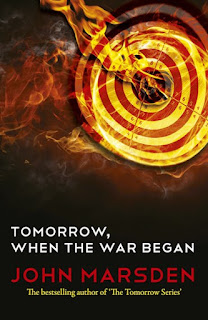
This is the first in an ongoing series of posts about some of the most popular, influential, and enduring Australian children's and YA novels.  Perhaps the most popular and successful Australian young adult novel series is an invasion narrative. John Marsden ’s "The Tomorrow Series" (1993-1999), which began with Tomorrow, When the War Began , has been reprinted more than thirty times with sales of more than three million copies, translated into various languages, and adapted into a film in 2010 and a television series in 2016.  The sequel series, "The Ellie Chronicles", reveals that the force that has invaded Australia is a coalition of South Asian countries seeking the space and natural resources that are limited in their populous region.  Given the origins and evolution of Australian children’s literature throughout the nineteenth and twentieth century, it is unsurprising that an invasion narrative is one of the most notable Australian young adult novels. The ...

How early Australian fairy tales displaced Aboriginal people with mythical creatures and fantasies of empty land

Image
A prince flies in a carriage propelled by kingfishers in Hume Cook’s Australian Fairytales. Author provided Michelle Smith , Monash University Content warning: this article contains reference to racist depictions of Aboriginal Australians. Most of us grew up reading fairy tales adapted from the European tradition: stories of kings, queens and princesses set in palaces and forests, such as Cinderella, Snow White, Beauty and the Beast. But what about the history of Australian fairy tales? Australia’s vast distances, deserts, harsh temperatures, deadly wildlife, and the ongoing cultures of Aboriginal Australians made the country a complicated fit for fairy tales. Indeed, few tales by Australian authors were published until the late 19th century. These early Australian fairy tales mythologised aspects of the country’s history and environment to sanitise the process of white settlement. In doing so, they helped to invent traditions and cultural explanati...